Certified Tough, Field Fragile: What MIL-SPEC Labels Leave Out of the Durability Conversation
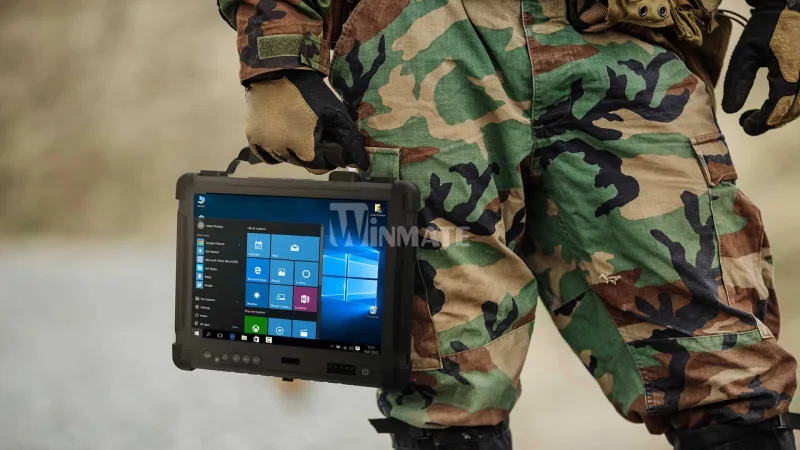
Photo: rugged tablet device military testing industrial field worker inspection, via www.winmate.com
Walk through any major enterprise technology trade show and you will encounter a familiar refrain from rugged device vendors: MIL-STD-810 compliant, drop-tested, shock-resistant. These phrases appear on specification sheets, procurement brochures, and product landing pages with the confidence of ironclad guarantees. For enterprise buyers under pressure to equip field teams quickly and defensibly, they can feel like sufficient due diligence.
They are not.
Across industries ranging from utility infrastructure to oil and gas to commercial construction, operations managers are confronting a persistent and costly reality: devices that pass rigorous laboratory certification protocols can still fail spectacularly under the specific conditions of their deployment environment. Understanding why requires a closer look at what military-grade testing actually measures—and, more importantly, what it does not.
What MIL-STD-810 Actually Tests
The MIL-STD-810 standard, developed by the U.S. Department of Defense, is a collection of environmental engineering test methods designed to assess how equipment performs under a defined set of stressors. These include temperature extremes, altitude, humidity, vibration, shock, and dust and water exposure, among others. Manufacturers submit devices to third-party or in-house testing labs, where the equipment is subjected to controlled versions of these stressors.
The critical detail that procurement teams frequently overlook is that MIL-STD-810 is a methodology, not a pass-fail benchmark. There is no single threshold that a device must clear to carry the label. Manufacturers select which test methods to apply, define the parameters within certain ranges, and determine how many test cycles to run. Two devices both claiming MIL-STD-810 compliance may have been tested under substantially different conditions.
"The spec sheet tells you the device survived a specific set of controlled drops from a specific height onto a specific surface," said one field operations manager overseeing device deployment for a Midwest-based utility company. "What it doesn't tell you is whether it survives being thrown into the back of a pickup truck every afternoon for three years, which is exactly what happens on our crews."
The Specificity Problem in Real-World Deployment
Field environments impose stressors that laboratory protocols approximate but rarely replicate with precision. Consider the difference between a standardized humidity test and a device deployed in the Gulf Coast during summer operations—cycling between an air-conditioned vehicle cab and 95-degree, high-humidity outdoor conditions dozens of times per shift. Or the distinction between a controlled vibration test and a device mounted to heavy equipment operating on uneven terrain for eight to ten hours daily.
The cumulative and combinatorial nature of real-world stress is particularly difficult to simulate. Laboratory tests tend to evaluate stressors in isolation. In the field, a device may simultaneously contend with heat, vibration, particulate exposure, and frequent handling by workers wearing gloves—conditions that interact in ways that standardized testing protocols are not designed to capture.
A facilities maintenance director at a large commercial construction firm described a procurement decision that resulted in a costly mid-cycle replacement. "We selected a device based on its ratings and its price point. It checked every box on paper. What we didn't account for was that our crews work primarily in concrete environments. The fine particulate dust in those settings is nothing like standard IP dust testing. We had screen failures and port degradation within eight months."
The Procurement Mistake That Keeps Repeating
The tendency to treat certification ratings as operational guarantees is understandable. Procurement teams operate under time constraints, budget pressures, and the reasonable expectation that standardized benchmarks exist precisely to simplify complex decisions. When a vendor presents a specification sheet with recognizable compliance labels, it signals a level of diligence that is difficult to argue against in a committee setting.
But several field operations professionals interviewed for this article pointed to a consistent pattern: the procurement process prioritizes verifiable, comparable data points—ratings, certifications, price—over qualitative assessments of environmental fit. The result is a selection process that is defensible on paper but misaligned with operational reality.
"We've learned to ask vendors very specific questions now," noted a regional operations director at a national logistics company. "Not 'is it MIL-SPEC?' but 'show us the actual test report, tell us which methods you ran, and give us a reference customer in a similar environment.' That conversation weeds out a lot of products very quickly."
What Actually Predicts Field Performance
Organizations that have successfully navigated the gap between certification and performance tend to employ a more rigorous evaluation process that goes beyond specification review. Several practices emerged consistently across the operations managers consulted for this article.
Pilot programs with environmental specificity. Rather than conducting generic device trials, high-performing organizations design pilots that mirror the actual conditions of their deployment environment as closely as possible. This includes shift length, task type, exposure conditions, and the physical handling patterns of their specific workforce.
Reference customer validation. Speaking directly with operations managers at companies in comparable industries and environments—not marketing contacts, but working managers—provides insight that no specification sheet can offer. The questions worth asking center on failure modes, repair frequency, and the delta between expected and actual device lifespan.
Vendor transparency on test parameters. Reputable manufacturers will provide full test reports, not just compliance claims. Reviewing those reports with a technically informed team member allows procurement leaders to assess whether the tested conditions are genuinely analogous to their operational environment.
Total cost modeling over device lifespan. Certification ratings influence purchase price but not necessarily total cost. A device with superior ratings that fails prematurely in a specific environment will ultimately cost more than a device with more modest certifications that is genuinely suited to the deployment context.
Raising the Standard for Device Selection
MIL-SPEC certification is not without value. It establishes a meaningful baseline and provides a common language for comparing devices across a crowded market. The problem is not the standard itself but the weight enterprise buyers assign to it relative to other factors.
The organizations that achieve the strongest return on their rugged device investments are those that treat certification as a starting point rather than a conclusion. They invest in the harder work of environmental analysis, pilot validation, and cross-functional evaluation that moves procurement decisions from the specification sheet to the job site—where the devices ultimately have to perform.
For enterprise decision-makers, the lesson is straightforward: a label certifies that a device survived a lab. Only the field can certify that it will survive your operation.